Do Not Clip or Cut Over Matted Fur
The single most common way owners injure a dog is by trying to cut a mat out with scissors. A tight mat pulls the skin up into itself, so the skin sits far higher than you expect. Slide scissors underneath and you can slice the skin badly without ever seeing it happen.
Mats also trap clippers, which then drag and nick loose skin. The safe approach is to work mats loose with your fingers and a comb, or to slide clippers flat underneath and shave them out gently, never to cut across them. If a mat is too tight or too close to the skin to tackle safely, leave it for a professional. Our guide on removing mats and tangles covers the safe technique in full.
Never cut a mat with scissors. Matted fur pulls the skin up with it, and a blind snip can open a serious wound in an instant.
Check Blade Heat Constantly
Clipper blades heat up fast, and a hot blade can burn a dog’s skin before you notice anything is wrong, most often on sensitive areas like the belly, groin and around the pads. The dog usually reacts by flinching or pulling away, which owners mistake for bad behaviour when it is actually pain.
Pause every few minutes and touch the blade to the inside of your own wrist. If it feels uncomfortably warm to you, it is too hot for your dog. Let it cool, switch to a spare blade, or use a cooling spray. Keeping blades clean, oiled and sharp also keeps them running cooler, because a clogged, blunt blade generates far more heat. Learn the full routine in using dog clippers safely.
Test the blade against your inner wrist every few minutes. A blade that feels hot to you can scald your dog's skin, especially in thin-skinned areas.
Avoid Cutting the Quick When Trimming Nails
Inside every nail is the quick, a bundle of blood vessels and nerves. Cut into it and the nail bleeds freely and hurts, and one bad experience can make a dog resist nail care for life. On pale nails the quick shows as a pink core; on dark nails you cannot see it at all, which makes caution essential.
Take off only a little at a time, and on dark nails stop as soon as you see a small dark dot appear in the centre of the cut surface. Always keep styptic powder to hand to stop bleeding quickly if you do catch it. Many first-time owners find a grinder gives them more control than clippers; our comparison of clippers versus grinders and the full method in trimming your dog's nails both help.
Keep styptic powder within reach before you start trimming nails. Cutting the quick causes pain and bleeding, so trim little and often rather than deep.
Never Use Human Tools or Products
Human grooming kit is one of the quiet causes of harm. Reaching for the wrong item does more damage than owners realise, and the common culprits are worth spelling out plainly:
- Human clippers are underpowered for dog coats and overheat quickly, dragging and pulling the fur.
- Human shampoo is the wrong pH for canine skin and strips the natural oils, leaving it dry, itchy and prone to irritation.
- Household scissors are sharp-tipped and far too easy to jab into skin; use blunt-nosed grooming scissors only.
- Human nail clippers crush and split a dog’s nail rather than cutting it cleanly.
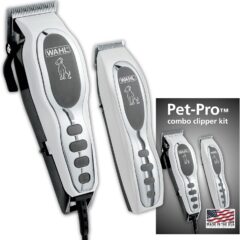
Always use products formulated for dogs. They are designed around canine skin, coat and anatomy, and using them removes an entire category of avoidable injury. A well-chosen dog-specific kit such as the Wahl Pro Series kit gives you the right tools from the start.
Protect the Ears, Eyes and Loose Skin
Delicate areas need extra care and a slower hand. Never push anything into the ear canal; clean only the visible part of the ear with a cotton pad, and keep clippers and scissors well clear of the eyes. Trimming around the face is where blunt-tipped scissors earn their keep, because a startled dog can turn its head into a sharp blade in a heartbeat.
Loose skin is the other hidden hazard. Around the armpits, flanks, belly and the folds of wrinkly breeds, skin bunches and stretches, and it is very easy to catch a fold in the clippers. Use your free hand to hold the skin flat and taut before you run the blade over it. Go slowly wherever the skin is soft, thin or mobile.
Never insert cotton buds, scissors or clipper tips into the ear canal, and always pull loose skin taut before clipping to avoid nicking a fold.
Know When to Stop and See a Professional
Good grooming includes knowing your limits. Stop the session if your dog becomes genuinely distressed, aggressive or exhausted; a frightened dog is far more likely to be injured, and pushing on damages their trust in the whole process. A short, calm session that ends early always beats a complete one that ends badly.
Some jobs are best handed over entirely. Severe matting, nervous or wriggly dogs, nails that have grown into the pad, or any sign of a skin problem all warrant a professional groomer or a vet. There is no failure in that; recognising what is beyond a home setup is itself a safety skill. When you do groom at home, follow a clear routine like our grooming checklist so nothing gets missed.
If you buy through our links we may earn a commission at no extra cost to you.
Frequently Asked
Cutting matted fur with scissors is the one that causes the worst injuries, because a mat pulls the skin up with it and a blind snip can open a deep wound. Never cut a mat; work it loose or shave underneath it flat, and hand tight mats to a professional.
No, human shampoo is the wrong pH for canine skin and strips the protective oils, which leads to dryness, itching and irritation over time. Always use a shampoo formulated for dogs. The same principle applies to clippers, scissors and nail tools.
Apply styptic powder to the nail tip with firm pressure, and keep some ready before you ever start trimming. If you have none, cornflour or a clean cloth with pressure can help. If bleeding does not stop within a few minutes, contact your vet.
Press it briefly against the inside of your wrist every few minutes. If it feels uncomfortably warm to you, it is too hot for your dog's skin. Let it cool, swap blades or use a cooling spray, and keep blades clean and oiled to reduce heat build-up.
Hand it over if your dog is severely matted, very frightened or aggressive, has nails grown into the pad, or shows any skin problem. Also stop any session where your dog becomes genuinely distressed. Knowing your limits is part of grooming safely, not a failure.