Start With the Right Brushes and Combs
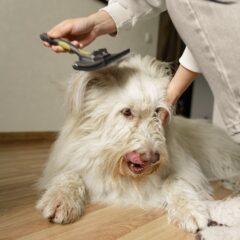
Brushing tools are the backbone of any kit. A slicker brush with fine, angled pins lifts loose hair and works through light tangles on almost every coat type. Pair it with a stainless steel comb to check for hidden knots close to the skin once you think you have finished.
Double-coated breeds also need an undercoat rake to reach the dense layer beneath the guard hairs. If you are choosing between the two main deshedding tools, our guide on slicker brushes versus undercoat rakes explains when to reach for each. A quality slicker such as the self-cleaning slicker makes clearing trapped hair between strokes far quicker.
If a comb glides from skin to tip without snagging, the coat is genuinely tangle-free. Trust the comb over the eye.
Choose Clippers and Guards That Suit the Coat
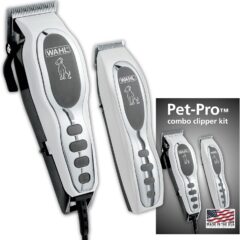
For any dog that needs trimming, a set of clippers is the biggest single decision. Look for quiet, low-vibration models with a cool-running blade and a set of snap-on guards ranging from short to long. Cordless kits offer flexibility, while corded models keep steady power for thick coats.
Curly and doodle coats blunt blades quickly, so a durable clipper matters. Kits like the Wahl Pro Series kit bundle guards, scissors and oil together for a tidy starting point. Whatever you choose, learn to use clippers safely before the first session.
Pause and touch the blade to your wrist every few minutes. If it feels hot to you, it is too hot for skin.
Pick Nail Tools You Feel Confident Using
Nail care needs its own tool. Scissor-style or guillotine clippers cut quickly and suit dogs who tolerate a fast trim. A rotary grinder files the nail down gradually, which many nervous dogs prefer and which leaves a smoother edge with less risk of splitting.
Black nails, where the quick is hard to see, are often easier to manage with a grinder taken in small passes. Keep styptic powder in the kit to stop bleeding if you catch the quick, and weigh up which style of nail tool suits your dog before you buy.
Always have styptic powder within reach before you start a nail trim, not in a cupboard across the room.
Add Scissors, Cleaners and the Small Extras
A few finishing tools round out the kit. Blunt-nosed safety scissors tidy paws, sanitary areas and the hair around the eyes without risking a jab if your dog moves. Curved scissors help shape feet and faces neatly.
Keep ear-cleaning wipes or solution, cotton pads and a non-slip mat to hand. A gentle, dog-specific shampoo completes the set. Store everything in one place so a groom never stalls halfway through a hunt for the comb.
- Blunt-nosed and curved scissors
- Ear cleaner and cotton pads
- Non-slip mat and towels
- Dog shampoo suited to the skin
Reserve blunt-nosed scissors for delicate areas near eyes and paws so a sudden wriggle cannot cause injury.
If you buy through our links we may earn a commission at no extra cost to you.
Frequently Asked
A slicker brush, a steel comb and a nail clipper or grinder cover the basics for most dogs. Add clippers and scissors if your dog's coat needs trimming, plus a gentle shampoo and ear cleaner.
Usually not. Short-haired dogs are maintained with a slicker brush, a comb and regular nail trims. Clippers are mainly for coats that grow continuously, such as Poodles, doodles and many terriers.
Focus on quality where it matters most, especially clippers and blades, which pull if poorly made. Well-built brushes and combs last for years and are gentler on the skin, so choose the essentials carefully.
Clippers handle the bulk of a coat quickly and evenly, while scissors give control for faces, feet and finishing. Most owners use clippers for the body and blunt-nosed scissors for delicate detail work.