Match Brushing Frequency to Your Dog's Coat
There is no single answer that suits every dog, because a smooth-coated Staffie and a Cockapoo live in completely different grooming worlds. The honest guide is to work from coat type first, then adjust for lifestyle and season.
As a rough weekly rhythm: short, smooth coats (Labrador, Beagle) need only a quick brush once or twice a week to lift dead hair. Double coats (German Shepherd, Husky) do best with two or three thorough sessions weekly, rising to daily during a seasonal blow-out. Curly and wool coats (Poodle, Doodle) and long silky coats (Yorkie, Shih Tzu) genuinely need brushing every single day to stay mat-free.
- Short/smooth: 1-2 times a week
- Double coat: 2-3 times a week, daily when moulting
- Curly/wool: daily, right down to the skin
- Long/silky: daily, in sections
If a comb will not glide cleanly from skin to tip anywhere on the body, you are brushing too rarely for that coat.
Adjust for Season, Age and Activity
Frequency is not fixed across the year. Most double-coated breeds shed heavily in spring and autumn, and during those two blow-outs you may need to brush and rake daily for a fortnight to keep on top of the loose undercoat. Our guide to deshedding a double coat covers the technique in detail.
Lifestyle matters too. A spaniel that works through hedgerows, or any dog that swims, picks up debris and dries into knots, so brush after muddy or wet outings rather than waiting for the usual day. Puppies benefit from short, frequent handling sessions to build tolerance, while elderly dogs with thinner skin need a gentler, more regular touch.
Water tightens loose knots into firm mats. Always dry and brush a long or curly coat once it is fully dry after swimming.
Why Short, Frequent Sessions Beat Marathons
Owners often skip brushing for a fortnight, then attempt a long, thorough session that leaves the dog sore and resentful. Little and often is kinder and more effective. A few focused minutes every day keeps the coat open and stops tangles forming faster than one weekly ordeal ever could.
Concentrate on the friction points where mats always begin: behind the ears, in the armpits, the collar line, the britches and the base of the tail. If you only have five minutes, spend them there. Keeping those zones clear is the single biggest factor in preventing matting between professional grooms.
Pair brushing with a settled evening routine so your dog learns to relax into it rather than brace against it.
Brush Down to the Skin, Not Just the Top
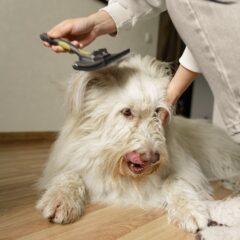
Frequency counts for little if you only skim the surface. Many coats look tidy on top while a dense layer of felt forms unseen against the skin. The professional method is line brushing: part the coat, hold the hair above the parting out of the way, and brush the exposed strip from the skin outwards before moving the parting along.
Work methodically from the feet upwards and from the rear forwards, so you always know where you have been. Finish by running a comb through the whole coat as a check: if it snags, that patch needs more work before you stop. A quality slicker such as the self-cleaning slicker brush makes clearing trapped hair between passes far quicker.
Never call a session finished until a comb passes cleanly from root to tip across the whole dog.
If you buy through our links we may earn a commission at no extra cost to you.
Frequently Asked
You cannot over-brush in terms of frequency, but you can over-brush one spot. Repeatedly slicker-brushing the same patch of bare skin causes 'brush burn', a red, sore irritation. Vary your pressure, keep moving, and stop working an area once it is smooth.
Once or twice a week is plenty for a smooth coat like a Labrador or Beagle. A rubber curry or bristle brush lifts dead hair and spreads skin oils. Increase to a few times a week during their lighter seasonal shed.
Brush a dry coat. Brushing wet hair, especially on curly or long coats, tightens loose tangles into firm mats and can snap the strands. If you must detangle damp hair, use a light detangling spray and a wide comb, working gently.
The clearest sign is a comb that will not reach the skin without catching. Visible clumps, a coat that feels dense or spongy near the roots, and shed hair collecting on furniture all point to sessions being too infrequent for that coat type.