Always Brush Out Thoroughly Before Bathing
The golden rule of long-coat grooming is that brushing comes before the bath, never after. Water shrinks and tightens any existing tangle into a solid mat, so a dog bathed while knotty comes out far worse. Get the coat completely tangle-free while it is dry.
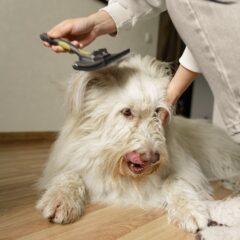
Use the line-brushing method throughout: part the coat, hold the hair above the parting back, and brush the exposed strip from the skin outwards before moving on. Work systematically over the whole dog, then prove your work with a comb from root to tip. Pay particular attention to the ears, armpits, britches and tail, the friction zones covered in preventing matting between grooms.
If you cannot comb a section cleanly to the skin, do not put the dog in the bath. Water will set that tangle for good.
Bathe and Condition for a Silky Finish
With the coat brushed out, bathing is straightforward. Wet the coat thoroughly with warm water, work a diluted dog shampoo through in the direction of the hair rather than scrubbing in circles, which itself causes tangles, and rinse until the water runs completely clear. Shampoo residue left in a long coat makes it dull and itchy.
Follow with a dog conditioner on long and silky coats; it smooths the cuticle, reduces static and makes the next brush-out far easier. Squeeze excess water gently from the coat rather than rubbing vigorously with a towel. For the technique in full, see our guide to drying a thick coat properly.
Long coats trap shampoo. Rinse for longer than feels necessary; leftover product is a common cause of dull, flaky coats.
Dry Fully and Brush as It Dries
Letting a long coat air-dry in a heap is how mats form overnight. Instead, dry actively. Towel off the excess, then use a dryer on a warm (not hot) setting while brushing the coat straight with a slicker or pin brush, section by section. This ‘fluff drying’ lifts the coat away from the skin and sets it smooth.
Keep the airflow moving so no single spot gets too warm, and keep your free hand near the nozzle to gauge the heat. Dry right down to the skin; a coat that feels dry on top can still be damp underneath, and damp roots quickly felt. Take particular care around the face and ears, using low airflow and shielding the eyes.
Dog skin scorches more easily than you expect. Keep the dryer moving and test the airflow on your own wrist regularly.
Light Trimming, Feet and Sanitary Areas
Most long-haired pets do not need a full clip at home, but a few tidy trims keep them comfortable and hygienic between fuller grooms. With blunt-nosed scissors, neaten the hair between and around the paw pads, trim any straggly hair that obscures the eyes, and keep the sanitary area short and clean.
- Trim paw hair flush with the pad, never poke scissors between the toes point-first.
- Comb eye-area hair forward and snip tips only, blades pointing away from the eye.
- Keep the belly and rear tidy for hygiene.
Always cut with the blades parallel to the body and use blunt-nosed scissors near the face. For close work around the eyes, our guide to trimming around the eyes covers the safe method.
A sudden head turn near sharp points causes most home-grooming injuries. Rounded safety scissors and a steadying hand prevent them.
If you buy through our links we may earn a commission at no extra cost to you.
Frequently Asked
Always brush first. Bathing a coat that still has tangles shrinks and tightens them into firm mats that are then very hard to remove. Only once the coat combs cleanly from root to tip is the dog ready for the bath.
Dry the coat fully and brush it straight as it dries rather than letting it air-dry in clumps. Using conditioner and drying section by section with a slicker keeps the hair smooth and open, which is what prevents damp roots from felting.
Long and silky coats need brushing every day to stay mat-free, with a full bath and blow-dry roughly every three to four weeks, or as needed. A professional tidy every six to eight weeks helps if you prefer to keep the length in shape.
Light tidying of the paws, eye area and sanitary parts is safe with blunt-nosed scissors and care. Full-length scissoring or clipping to a breed style takes practice, so many owners leave the shaping to a groomer and handle maintenance at home.