Brush and Comb the Curls Completely First
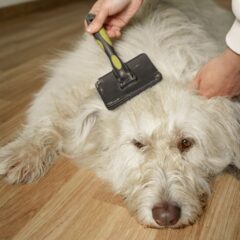
Curly coats trap loose hair rather than shedding it, so mats form close to the skin almost unnoticed. Before any clipping, work through the whole coat with a slicker brush, then confirm with a steel comb that it passes cleanly from skin to tip everywhere.
The comb test is non-negotiable. If the comb catches, there is a mat, and clipping over it gives a ragged finish and a pulling blade. Pay special attention to the armpits, behind the ears and the collar area.
If the coat is heavily matted throughout, brushing may not be kind or possible, and a short reset clip is the better option. Ongoing coat care covers keeping on top of this between clips.
A steel comb must glide from skin to tip everywhere before you clip. If it snags, demat that spot first.
Bathe, Then Dry the Coat Fully and Straight
Clip a curly coat only when it is spotless and bone dry. A bath lifts dirt that would blunt the blade, but the drying is what matters most: air-dried curls tighten and clump, so blast or fluff-dry the coat straight while brushing.
A high-velocity or stand dryer, brushing as you go, opens the curl and gives you a smooth, even surface to clip. Damp or curled hair clogs the blade and leaves tramlines. Take your time here; a properly dried doodle is half the battle won.
Never clip a wet doodle. If you skip the drying, expect a bumpy, uneven cut and a lot of blade snagging.
Brush the coat straight as you dry it. A fluff-dried doodle clips evenly; an air-dried, curled one never will.
Choose Your Length and Clip the Body Evenly
Decide your finished length and pick the guard to match. A medium guard leaving around 13 to 19mm gives a classic teddy-bear body that resists rematting; go shorter for easier upkeep, longer for a fuller look but more brushing.
Clip with the direction of hair growth in long, overlapping passes, keeping the skin taut. Curly coats hide the skin, so go slowly over knobbly areas like the hips, spine and hocks. If the blade starts to drag, check the causes of pulling before pressing on.
Oil the blade regularly and check its temperature often; the density of a doodle coat heats a blade quickly, and a hot blade burns.
Dense curls overheat a blade fast. Touch it to your hand every minute or two and cool or swap it before it burns the skin.
Scissor the Face, Legs and Feet to Shape
The signature doodle look lives in the scissor work. Use curved scissors to round the face and cheeks, and straight scissors to blend the leg hair into neat columns and tidy the feet. Comb the hair out, then trim a little at a time.
Round the feet by combing the hair down over the pad and scissoring level with the ground for a clean, cat-foot finish. Blend where the clipped body meets the scissored legs so there is no hard line.
Take the face slowly and carefully; for the delicate detail around the eyes and muzzle follow the face and sanitary guide and use round-tip scissors near the eyes.
Scissor a small amount, comb, and reassess. You can always take more off, but you cannot put curly coat back.
Keep the Coat Between Clips to Prevent Matting
A doodle clipped and then left unbrushed will mat within a fortnight. Brush and comb the coat several times a week, right down to the skin, focusing on the friction points that felt first.
Regular short sessions are far kinder than an occasional heavy demat, and they keep the next clip quick and painless. Line brushing, working in sections from the skin outward, is the technique that actually reaches the base of the curl.
Book or plan clips every six to eight weeks for most doodles. Consistent upkeep, covered in the between-grooms routine, is the difference between an easy coat and a pelted one.
Curly coats need brushing to the skin several times a week. Skip it and even a perfect clip mats within days.
If you buy through our links we may earn a commission at no extra cost to you.
Frequently Asked
A guard leaving around 13 to 19mm gives a classic teddy-bear look that resists rematting. Shorter is easier to maintain, longer looks fuller but needs more frequent brushing to stay mat-free.
Usually because it was clipped damp or curled. Curly coats must be bathed, then fully dried and brushed straight so the blade meets a smooth surface, otherwise you get tramlines and snagging.
Most doodles need a full clip every six to eight weeks, with brushing to the skin several times a week in between. Without that upkeep the coat mats quickly and the next clip has to go shorter.
Only if the mats are few and you can lift them from the skin. A coat that is matted throughout is safest clipped short as a reset by an experienced hand, rather than brushed out, which would be painful.