Choose the Right No-Bath Method
Washing without a tub is ideal for dogs who dread water, for flats without a suitable bath, for winter when a wet coat is hard to dry, and for quick clean-ups between full baths. It is not a full substitute for a proper wash when a dog is genuinely filthy, but for everyday grime it is often all you need.
The main approaches are no-rinse foams and sprays, grooming wipes, and plain damp-cloth spot-cleaning. Each targets a different level of mess, and you can combine them.
If your dog panics at any washing, build confidence first with the calming techniques in our guide for water-shy dogs before you begin.
Waterless washing removes surface dirt and odour but does not deep-clean skin. Use it between baths, not instead of them forever.
Start With a Thorough Brush-Out
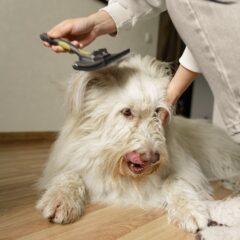
Dry brushing before any waterless wash does half the job. It lifts dust, loose hair and dried mud, and it separates the coat so the foam or cloth can reach the skin rather than sitting on top of tangles.
Work with a slicker brush for most coats, following the lie of the hair in small sections. For a shedding double coat, take the time to remove loose undercoat now, because trapped fluff holds odour and moisture.
A quality slicker makes this quicker and gentler; the self-cleaning design we cover in this slicker brush review is well suited to a fast pre-wash tidy.
Foam applied over a matted coat cannot clean the skin beneath and can leave the mats damp and sour.
Apply Waterless Foam or Spray Correctly
Work in a well-lit spot with your dog standing on a non-slip surface. Apply the no-rinse product a section at a time rather than all over at once, so it does not dry before you have massaged it in.
Massage the foam down to the skin with your fingers or a rubber mitt, following the product’s guidance on contact time. Then wipe each section firmly with a clean, barely damp microfibre cloth to lift the loosened dirt away.
- Legs and belly: where most walking mud collects
- Rear and tail base: a common source of odour
- Chest and ruff: where drool and food gather
Keep foam and sprays away from the eyes and inside the ears. For the face, use a barely damp cloth only.
Target Paws, Rear and Face by Hand
Much of what makes a dog look and smell dirty is concentrated in a few areas, so targeted cleaning is efficient. Muddy paws respond well to a damp cloth worked between the pads and toes, followed by a proper dry to prevent soreness.
For a grubby rear or a food-caked beard, grooming wipes or a damp cloth with a dab of no-rinse foam work well. Wipe in the direction of hair growth and finish by drying, because residual damp is what turns into smell.
The face needs its own careful approach; follow the eye and ear precautions in our face-washing guide to avoid getting product where it should not go.
Always towel-dry after spot-cleaning. A dog left damp will smell worse within hours, defeating the point.
If you buy through our links we may earn a commission at no extra cost to you.
Frequently Asked
Use a no-rinse waterless shampoo, grooming wipes or a barely damp cloth, working the product into the coat and wiping away the loosened dirt. Brush thoroughly first and dry afterwards. This handles everyday grime, though a truly filthy dog still needs a proper bath.
Yes, for surface dirt and mild odour they work well and are handy for water-shy dogs or cold weather. They lift grime and freshen the coat but do not deep-clean the skin, so they complement rather than fully replace occasional proper baths.
It is better to use wipes made for dogs, as human and baby wipes can contain fragrances or ingredients unsuited to canine skin. Dog grooming wipes are pH-appropriate and safer for regular use on paws, rears and coats.
Wipe each paw with a damp cloth, working gently between the pads and toes to lift caked mud, then dry thoroughly. Keeping a cloth and towel by the door makes this a fast routine after every walk and prevents mess spreading indoors.